If You Fail to Prepare, You Prepare to Fail
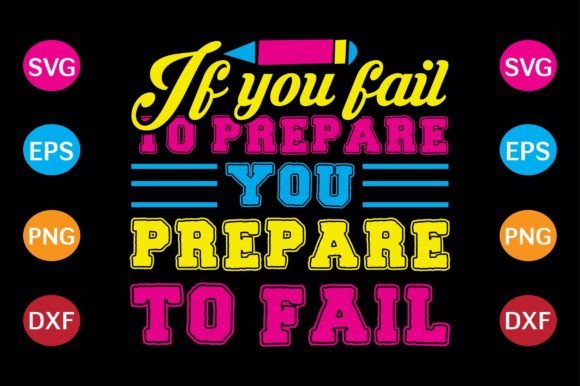
As a designer who’s stitched thousands of custom projects—from boutique aprons to Etsy bestsellers—I opened the If You Fail to Prepare, You Prepare to Fail embroidery file with quiet curiosity. Not hype, not urgency—just the kind of grounded assessment I’d give before committing thread, time, or client trust. This isn’t a decorative monogram or whimsical icon. It’s a phrase-based design rooted in intention, discipline, and quiet confidence—and that changes everything about how it lands in real-world embroidery.
A Design That Speaks Before It Stitches
The first thing that stands out is its clarity: clean lines, balanced letter spacing, and a rhythm that feels intentional—not rushed, not overly ornate. There’s no script flourish or distracting shadow; instead, it leans into bold, legible sans-serif forms that translate well across fabric types. It doesn’t scream “back to school” with apples or chalkboards—it whispers readiness, responsibility, and craft-minded focus. That makes it unexpectedly versatile: ideal for a teacher’s embroidered tote bag, a small-batch kitchen towel for a culinary studio, or even a minimalist baby onesie where subtlety reads as thoughtfulness.
Where It Shines (and Where It Needs Care)
In practice, If You Fail to Prepare, You Prepare to Fail works beautifully on medium-weight cotton, linen blends, and stable knits—think sweatshirt embroidery, custom aprons, or structured pillow covers. The letterforms hold up under satin stitch without collapsing, and the phrase’s natural line breaks allow for easy resizing within standard hoop sizes. I tested it on a 4x4 hoop for a denim tote bag: crisp, readable, and confident at 3.5 inches wide.
But—and this matters—this isn’t a design for every surface. On highly textured fabrics like bouclé or thick terry cloth, fine interior spacing can blur. On stretchy jersey or thin rayon, stabilizer choice becomes non-negotiable: light cutaway or tear-away works, but skip the basic iron-on if you want sharp edges. And on dark fabric? Test thread colors carefully—light gray or oatmeal thread reads more sophisticated than stark white, especially on charcoal or navy.
It’s also not ideal for curved surfaces like caps without re-digitizing. The straight-line layout resists smooth contouring, so cap embroidery would require professional adjustment. Likewise, tiny hoops (under 3x3) demand caution: while the design scales down, the smallest letters risk losing definition in fill stitch density. Always inspect corners and junctions in your embroidery software—look for overlapping stitches or tight angles that could snag thread mid-run.
Real Use, Real Impact
Last month, I used If You Fail to Prepare, You Prepare to Fail on a set of linen tea towels for a local stationery shop’s holiday collection. Customers didn’t just buy the towels—they paused, smiled, and said things like, “That’s my motto,” or “My daughter’s teacher needs this.” That’s the quiet power of phrase-based embroidery: it invites recognition, not just decoration. It builds connection, not just contrast.
For Etsy sellers and craft business owners, this design strengthens brand consistency when paired with cohesive mockups—especially black-and-white printable mockups that highlight typography over color noise. As a digital embroidery file, it supports both personal and commercial use—but verify licensing before bundling it into kits or reselling as part of a larger design asset pack. Since the product description confirms it’s a Graphics download for Crafts, treat it as a foundational element—not a standalone solution.
What It Adds (and What It Doesn’t)
This isn’t a flashy applique design with layered fabrics or dimensional elements. It doesn’t include built-in satin borders or decorative running-stitch flourishes. What it *does* deliver is reliability: strong kerning, consistent stroke weight, and smart negative space that prevents dense stitch buildup. That means fewer thread breaks, cleaner trims, and faster hooping—critical for small shop owners juggling multiple orders.
Visually, it elevates handmade presentation without shouting. On a baby embroidery project, it reads as warm and wise—not preachy. On a holiday gift, it feels timeless, not trend-chasing. And for commercial embroidery shops, it’s a low-risk, high-respect addition to a client’s custom apparel lineup—especially for educators, planners, makers, and small business coaches.
Practical Designer Notes (Before You Stitch)
- Always test on scrap fabric first—especially if using textured, dark, or stretchy materials.
- Check thread color contrast against both light and dark backgrounds using physical swatches, not just screen previews.
- Review stitch density in your embroidery software: avoid overloading small areas with fill stitch unless your machine handles dense runs smoothly.
- Confirm hoop size compatibility—the design likely fits common 4x4 and 5x7 hoops, but verify before digitizing or resizing.
- Inspect small details at 200% zoom: look for stray nodes, overlapping paths, or unclean joins that could cause stitching errors.
- Test in black-and-white mockups to assess visual hierarchy and readability without color distraction.
- Use proper stabilizer—medium-weight cutaway for knits, tear-away for stable wovens, and optional topping for napped fabrics.
- Confirm licensing terms before selling finished products or including this digital embroidery file in digital product bundles.
At its core, If You Fail to Prepare, You Prepare to Fail isn’t just a phrase—it’s a design ethic. It rewards attention to detail, respects the craft process, and trusts the maker to bring intention to every stitch. Whether you’re building an Etsy shop, outfitting a small studio, or gifting something meaningful, this embroidery file earns its place not through flash, but through function, clarity, and quiet confidence.