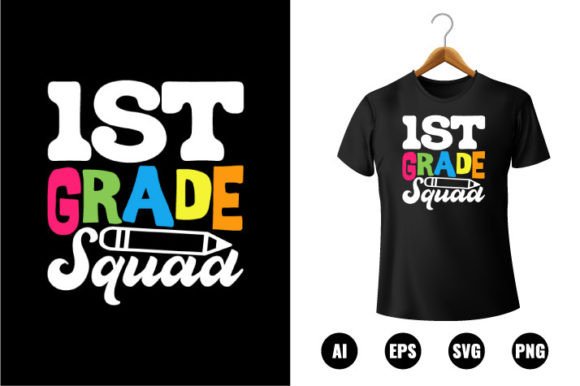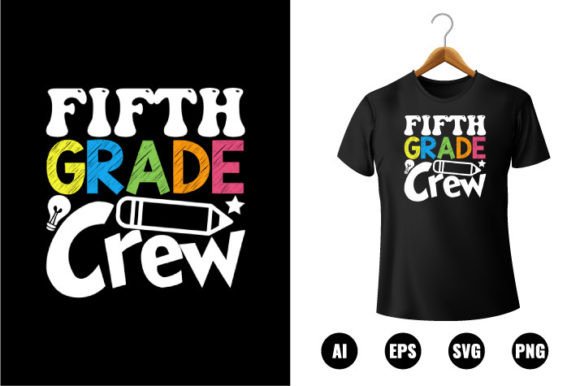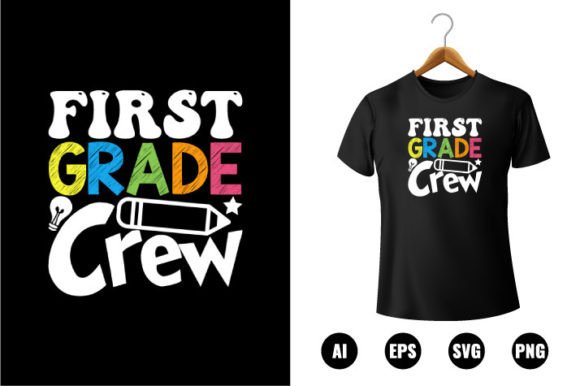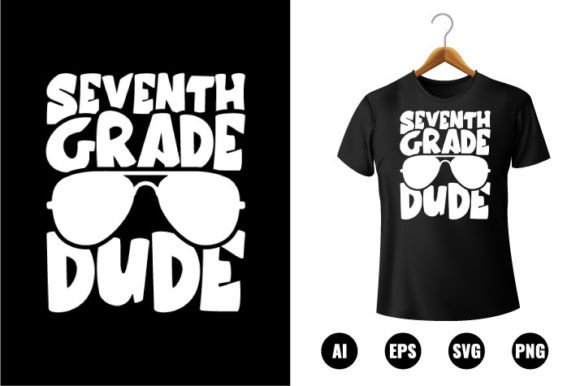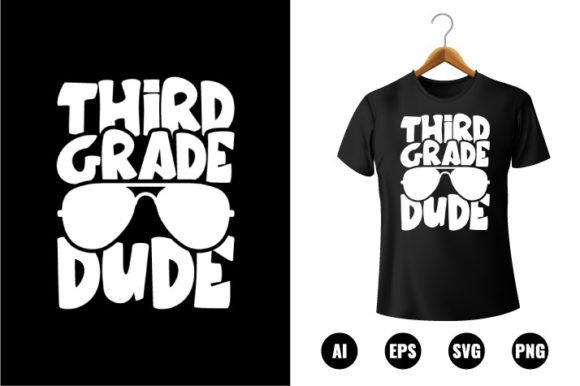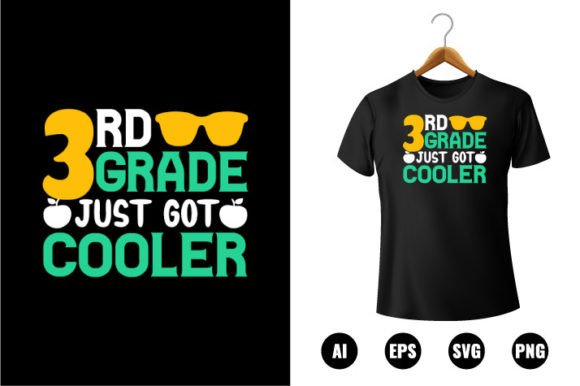
3rd Grade Just Got Cooler T-shirt Design
A Designer’s First Look: Playful, Not Precious
When I opened 3rd Grade Just Got Cooler T-shirt Design, my first thought wasn’t “cute” — it was “confident.” It lands with a smile that doesn’t try too hard: bold lettering, friendly cartoon elements (think stars, pencils, or a subtle backpack icon), and open negative space. As an embroidery designer who’s stitched hundreds of school-themed projects, I appreciate how this avoids visual clutter. It’s not overly detailed — no tiny faces, no nested outlines — which is a huge plus for real-world stitching. That breathing room means fewer thread breaks, cleaner satin stitch edges, and better readability on a child’s sweatshirt or a teacher’s tote bag.
Where This Design Actually Shines
I recently prepped a batch of embroidered canvas tote bags for a local elementary PTA fundraiser. We needed something joyful but age-appropriate for third graders — not babyish, not teen-angsty. 3rd Grade Just Got Cooler T-shirt Design slotted in perfectly. On medium-weight canvas with a light tear-away stabilizer, the lettering held crisp lines, and the graphic elements translated cleanly in fill stitch without ballooning. It also worked well on lightweight cotton sweatshirts — the design’s balanced weight distribution meant no puckering around curves or seams.
For small business owners and Etsy sellers, this is a quietly versatile asset. It reads clearly on baby onesies (scaled down 70%), pops on kitchen towels as a holiday gift (think “Back to School” teacher appreciation bundles), and holds up beautifully as an embroidered patch on denim jackets. As a digital embroidery file, it’s equally effective for printable mockups — its clean silhouette makes it easy to preview on light and dark apparel backgrounds without heavy editing.
Real Embroidery Considerations — Not Just Theory
Let’s be practical: 3rd Grade Just Got Cooler T-shirt Design isn’t built for ultra-fine detail work. If you’re planning to stitch it on a curved cap front or a stretchy jersey t-shirt, test it first. The letterforms are friendly, but some characters (like the lowercase “g” or “a”) may need slight digitizing tweaks for optimal legibility at under 3 inches wide. On textured fabrics like terry cloth or fleece, use a cut-away stabilizer — the open layout helps, but dense fill areas still need support.
Dark fabric? No problem — just choose high-contrast thread colors. Light fabric? Avoid pale yellows or pastels unless you want softness; go for navy, forest green, or deep red for impact. And if you’re using it commercially — say, on boutique-branded aprons or personalized lunchboxes — confirm licensing terms before listing finished products. The product description says these digital clip art files can be used for clothes printing, engraving, stickers, canvas, scrapbooking, and printable decoration — but embroidery-specific commercial rights aren’t spelled out, so verify before scaling your craft business.
What It Adds — and What It Doesn’t Pretend To Be
This isn’t a luxury monogram or heirloom embroidery motif. It’s a confident, cheerful, ready-to-stitch machine embroidery design built for connection — not perfection. When stitched on a child’s backpack strap or a teacher’s pillow cover, it sparks recognition and warmth. Customers notice that. They trust handmade products that feel intentional, not rushed — and 3rd Grade Just Got Cooler T-shirt Design delivers that impression because it’s designed *with* embroidery constraints in mind, not against them.
It boosts giftability without overcomplicating. A stitched tea towel with this design feels special but approachable — perfect for back-to-school swaps or classroom welcome kits. For Etsy sellers, it adds consistent brand personality across listings: same design, different applications (tote, patch, onesie) creates visual cohesion in your shop. And for craft fair vendors, it’s quick to produce, easy to explain, and reliably resonates with parents and educators alike.
Designer Notes You’ll Actually Use
- Always test the 3rd Grade Just Got Cooler T-shirt Design on scrap fabric first — especially if pairing it with textured or stretchy materials.
- Check stitch density visually in your embroidery software. If fill areas look overly dense, adjust underlay or reduce density slightly to prevent stiffness on lightweight garments.
- Confirm hoop size compatibility early — while the design scales well, very small hoops (e.g., 4x4 inch) may require simplifying or repositioning elements.
- Inspect small details at 100% zoom: are any interior corners or connecting strokes too tight for reliable satin stitch? Some manual cleanup may help.
- Preview in black and white mockups — this reveals contrast issues faster than color previews do.
- Use proper stabilizer: tear-away for stable wovens, cut-away for knits or stretchy blends, and heavy cut-away for towels or canvas.
- Remember: this is a digital embroidery file, not a vector graphic — treat it as a functional tool, not just a visual asset.
Final Thought: A Workhorse With Personality
3rd Grade Just Got Cooler T-shirt Design earns its place in my working library because it balances charm and practicality. It’s not trying to be everything — it’s a focused, school-year-ready embroidery file that supports real projects: custom apparel for kids, thoughtful teacher gifts, small shop merchandise with heart, and digital product previews that convert. Whether you’re an experienced embroiderer, a growing craft business, or a hobbyist building confidence, this design respects your time, your machine, and your customers’ expectations. Just remember to test, stabilize, and stay grounded in what the fabric — and the wearer — actually need.